
 日本語
日本語
Environment
Environmental philosophy and policy
Uchiyama Group Environmental Philosophy
To protect the environment, the Uchiyama Group will work as a whole to produce and improve our products in harmony with beautiful nature.
Uchiyama Group Environmental Policy
The Uchiyama Group will promote the following items in order to provide products and services that satisfy our customers and reduce the environmental impact of our corporate activities.
We will strive to effectively use limited natural resources, promote energy-saving activities, and incorporate the 3R(Reduce,Reuse,Recycle. We will also continue to investigate and reduce the use of substances of concern in our products. We will continue to reduce environmental impact and promote activities that strive to prevent pollution.
Comply with relevant environmental laws and regulations and make necessary arrangements to work with customers and neighboring communities.
Continuous improvements will be made through regular internal audits and review of the environmental management system.
This environmental policy is described in the Environmental Management Manual and is available to all members of the Uchiyama Group in an effort to raise awareness of the environment.
Environmental management system (ISO14001)
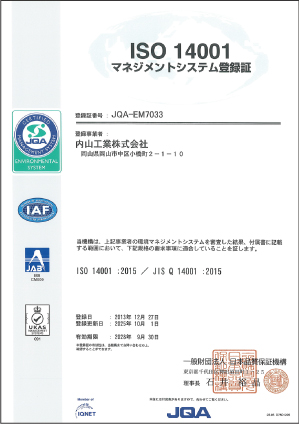
ISO14001 operation management system
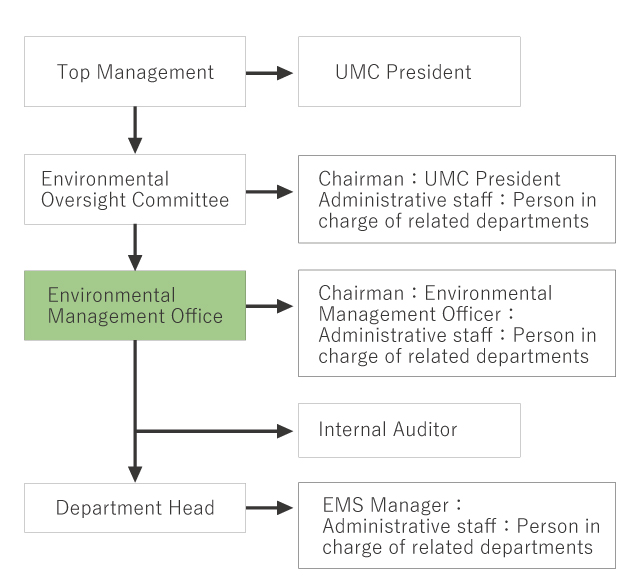
We have organized a ISO14001 operation control system the chief officer. Activities to realize a sustainable society, such as reducing CO2 emissions, have become active, and we are working together to respond to increasingly growing demands for corporations.
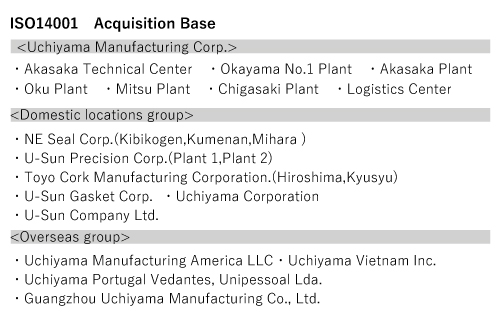
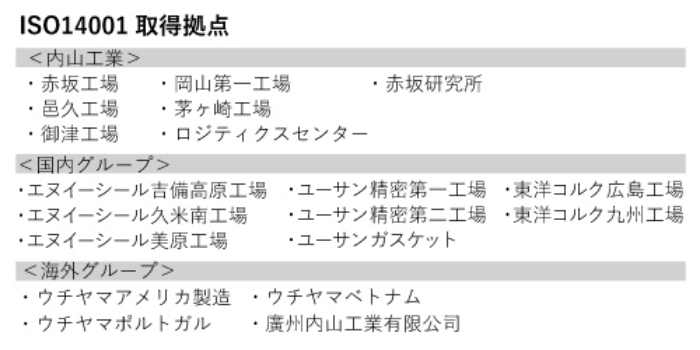
Long-term Environmental Targets and Results
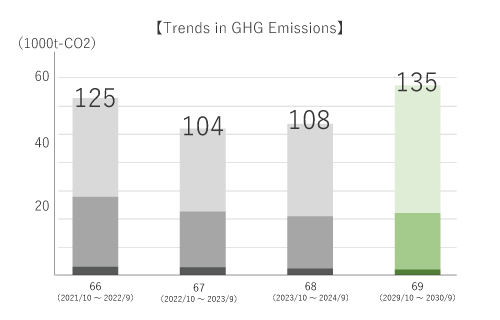
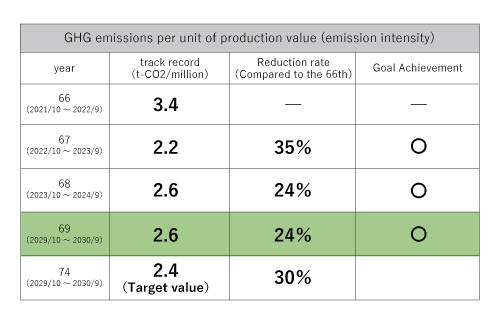
The Uchiyama Group has set a target of virtually zero emissions in 2050 by reducing emissions of GHG (greenhouse gases) by 3% every year, based on the 66th fiscal year (2021/10 to 2022/9). From SCOPE1 to 3, we will reduce GHG emissions in all processes associated with our business activities.
Development Initiatives
Of the material
Development
In order to reduce risks to the environment and achieve a sustainable society, the Materials Development Division is creating environmentally friendly materials using biomass-derived materials. As it is a material used in automotive products that preserve the lives of people, we are developing high-quality materials that are not only environmentally friendly but also satisfy strict evaluation standards.
Manufacturing Efforts
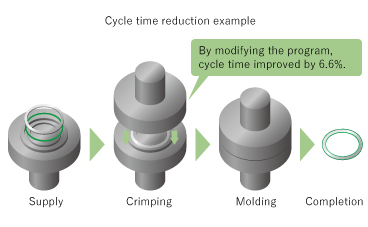
In order to carry out production activities efficiently without waste, we are constantly working on activities that are conscious of improving productivity. On the production line, we are pursuing improvements in productivity on a daily basis, such as by changing programs to reduce cycle time.
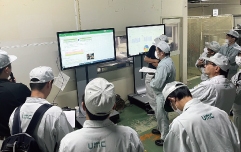
To reduce defect rates, each production site carries out various improvement activities on a daily basis, and the details of these activities are shared at regular improvement meetings. By exchanging opinions and ideas with other sites, we enhance our skills and contribute to reducing defect rates across all locations. (Photo: A scene from an improvement meeting)
Procurement initiatives
Of the material
Procurement
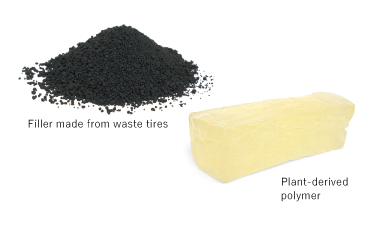
To develop environmentally friendly products, we are promoting the procurement of biomass materials. We procure fillers made from waste tires as raw materials (upper left of photograph) and polymers made from plant-derived materials (lower right of photograph), etc., and utilize them for product development.
products made
from scrap wood
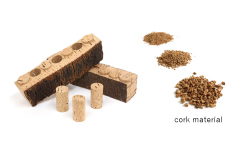
We have developed a pedestrian paving material made from rubber scraps generated during the production of automotive rubber products. By reusing rubber scraps that were previously incinerated, this product helps reduce CO2 emissions. It is an eco-friendly product that features cushioning to prevent pedestrian injuries and a cork surface that mitigates temperature increases caused by direct sunlight. (Photo: Pedestrian paving material made from rubber scraps)
Logistics Initiatives
Optimization
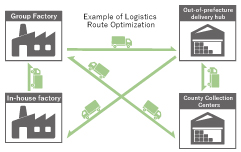
By optimizing the route from our company and group factories to collection points within the prefecture—previously covered by three trucks—to a more efficient route including delivery points outside the prefecture, we reduced CO2 emissions from product transportation by approximately 73 tons per month. *Measured using the improved ton-kilometer method
Efforts in general
Energy
Introduction
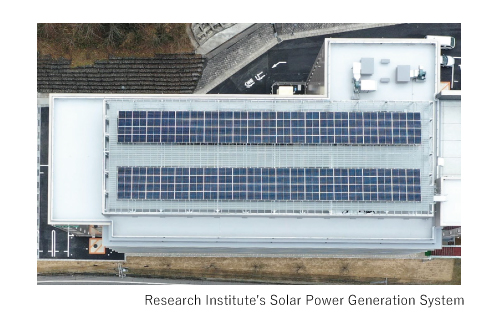
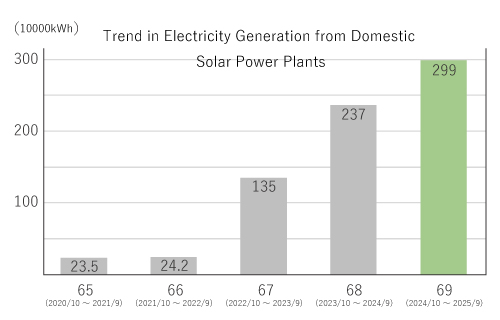
Solar power generators are installed on the rooftops of laboratories and factories to provide a portion of the power consumed for business activities. We are promoting the introduction of renewable energy throughout the Group.
Electricity
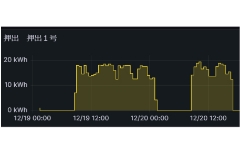
To reduce unnecessary power consumption in production activities, we are advancing power measurement and visualization by production area. Power usage is displayed graphically over operating hours, serving as reference data for identifying causes of wasteful power consumption and implementing efficient improvement activities.(Electricity Usage Chart)
Activities to reduce
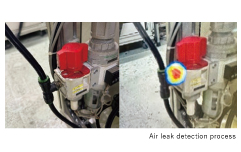
To reduce energy loss, each plant is working to decrease air leakage from its compressors. In addition to auditory checks, we have introduced equipment that detects areas where air leaks occur with sensors to conduct efficient activities.
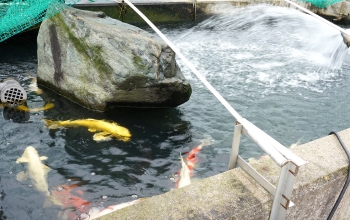
Each plant is equipped with wastewater treatment facilities that discharge wastewater that meets standards set by local governments or laws. Since the quality of wastewater after treatment is stable, some facilities have living fish on-site.(Wastewater Treatment Equipment)
Reduction
We strive to establish a recycling-oriented society by promoting 3R(Reduce,Reuse, Recycle) through the efficient use of our resources. We are working to reduce environmental impact by developing products made from rubber waste generated in the course of production, and by purchasing metal parts as recyclable resources to promote recycling.